




Taxation of Income Earned by Foreign Subsidiaries
-
-
-
-
Who is AICPA?
AICPA (the Association) represents AICPA® & CIMA®.
The Association has over 696,000 members in 192 countries. AICPA is the worldwide leader on public and management accounting issues through support for the CPA license, specialized credentials, professional education & thought leadership.
Taxation of Income Earned by Foreign Subsidiaries
Taxation of Income Earned by Foreign Subsidiaries is an AICPA & CIMA online course for tax professionals who need to understand CFC status, U.S. shareholder rules, Subpart F income, earnings and profits, PFICs and foreign asset reporting in a U.S. international tax context.
Key takeaways for quick decision-making
- This course is useful after Introduction to U.S. Outbound and Inbound Transactions if you want deeper foreign subsidiary coverage.
- The official AICPA & CIMA listing shows 7 CPE credits, online format, Taxes field of study, Intermediate level and product number ITCC25SSO.
- Key topics include U.S. outbound transactions, Subpart F income, earnings and profits in an international context, PFICs and foreign assets.
- AICPA states this course can be purchased individually or as part of the U.S. International Tax: Inbound and Outbound Transactions bundle.
- Important badge note: AICPA states you must purchase the bundle to earn the digital badge, so this standalone course should not be promoted as badge-bearing.
What is Taxation of Income Earned by Foreign Subsidiaries?
Taxation of Income Earned by Foreign Subsidiaries is an AICPA & CIMA CPE self-study course focused on U.S. income taxation rules for foreign subsidiaries. It explains how CFC status, U.S. shareholder definitions, Subpart F income, E&P, PFICs and foreign asset reporting affect cross-border tax analysis.
This course is more technical than a foundation course because it moves from identifying inbound and outbound transactions to analyzing income earned through foreign subsidiaries. It is especially useful for professionals supporting multinational groups, U.S. shareholders or clients with foreign investment structures.
Taxation of Income Earned by Foreign Subsidiaries official AICPA course facts
The official AICPA & CIMA listing shows Taxation of Income Earned by Foreign Subsidiaries as an online Intermediate course with 7 CPE credits. The official product number is ITCC25SSO, and the course is part of the U.S. International Tax Certificate pathway.
| Course detail | Official information |
|---|---|
| Official title | Taxation of Income Earned by Foreign Subsidiaries |
| Product number / SKU | ITCC25SSO |
| Format | Online |
| CPE credits | 7 |
| NASBA field of study | Taxes |
| Level | Intermediate |
| Availability | 1 year |
| Authors | Eric Gabbai, Kyle Brandon, Christopher Summer, Farid Khosravi and David Zaiken |
| Who benefits | Public and corporate tax professionals interested in building a solid foundation in U.S. international taxation |
| Digital badge | AICPA states this course can be purchased individually or as part of the U.S. International Tax: Inbound and Outbound Transactions bundle, and that the bundle must be purchased to earn the digital badge. |
| Official source | AICPA & CIMA course page |
Last verified: May 13, 2026. Product facts, pricing and access terms can change, so verify the official AICPA & CIMA page before publishing time-sensitive information.
Who should take this foreign subsidiaries tax course?
This course is best for public and corporate tax professionals who deal with foreign subsidiaries, CFCs, PFICs or U.S. shareholder issues. It is also useful for finance professionals who support multinational tax reporting and need to understand why foreign income can create current U.S. tax consequences.
| Learner profile | Why this course fits | When to choose the full certificate instead |
|---|---|---|
| Corporate tax professional | You need to understand CFC status, Subpart F income and E&P concepts for foreign subsidiaries. | Choose the full certificate if you manage multiple inbound, outbound and advanced international tax areas. |
| Public accounting tax staff | You support clients with foreign subsidiary structures and need clearer issue-spotting skills. | Choose the full certificate if you want the full AICPA U.S. international tax pathway. |
| Finance manager in a multinational | You need to discuss CFC, PFIC and foreign asset reporting issues with advisors more confidently. | Choose the full certificate if your role includes ongoing international tax coordination. |
| CA, CPA, ACCA or CMA learner | You want targeted CPE on foreign subsidiaries and anti-deferral concepts. | Choose the full certificate if you want broader coverage and certificate progression. |
What will you learn in Taxation of Income Earned by Foreign Subsidiaries?
You will learn how to identify controlled foreign corporations and U.S. shareholders, differentiate Subpart F income types, apply E&P concepts, understand Section 962 election mechanics, and recognize PFIC and foreign asset reporting consequences.
Official key topics
- U.S. outbound transactions
- Subpart F income
- Earnings and profits in an international context
- Passive Foreign Investment Companies and foreign assets
Official learning outcomes
- Identify a controlled foreign corporation (CFC) and a U.S. shareholder.
- Identify the mechanics of Section 962 elections.
- Differentiate among Subpart F income types.
- Identify situations that create Subpart F income for a U.S. entity.
- Identify common E&P adjustments.
- Apply E&P concepts to common international tax transactions.
- Determine the consequences of PFIC ownership.
- Identify PFIC reporting requirements and foreign asset reporting requirements beyond PFICs.
How this course fits into the U.S. International Tax Certificate pathway
Taxation of Income Earned by Foreign Subsidiaries is part of the U.S. International Tax Certificate learning path. It can be purchased individually, but AICPA states that learners must purchase the U.S. International Tax: Inbound and Outbound Transactions bundle to earn the digital badge.
| Option | Best for | Credential note |
|---|---|---|
| International Tax Foundation | Learners who need the first basic introduction to U.S. international tax vocabulary. | Standalone course. Bundle purchase is needed for the related badge. |
| Introduction to U.S. Outbound and Inbound Transactions | Learners who want transaction-level inbound and outbound coverage before foreign subsidiary rules. | Standalone course. Core Concepts bundle purchase is needed for the related badge. |
| Taxation of Income Earned by Foreign Subsidiaries | Learners who need targeted CFC, Subpart F, E&P, PFIC and foreign asset reporting coverage. | Standalone course. AICPA states the Inbound and Outbound Transactions bundle must be purchased to earn the digital badge. |
| U.S. International Tax Certificate | Tax professionals who want the complete AICPA pathway across core, inbound/outbound and advanced topics. | Official AICPA listing shows 51.5 CPE credits, intermediate level and 2-year availability. |
Practical examples of foreign subsidiary tax issues
Foreign subsidiary tax issues often begin with ownership and income classification. A tax professional needs to ask who owns the foreign entity, whether it is a CFC, what type of income it earns, whether E&P adjustments are needed, and whether PFIC or foreign asset reporting rules apply.
Example 1: A U.S. parent owns a foreign subsidiary
A U.S. parent company owns a foreign operating company. The first tax questions include whether the entity is a controlled foreign corporation and which persons are U.S. shareholders. This course helps learners identify that starting point before moving to income inclusion rules.
Example 2: A foreign subsidiary earns passive income
A foreign subsidiary earns income that may fall into a Subpart F category. The tax team needs to identify the type of income and whether current U.S. inclusion could arise. The course gives learners a structured way to separate Subpart F income types.
Example 3: A finance team reviews E&P adjustments
A finance team prepares international tax reporting and sees earnings and profits adjustments in the workpapers. E&P is not always the same as book profit. This course helps learners understand why E&P concepts matter in common international tax transactions.
Example 4: An individual investor holds a foreign fund
A U.S. taxpayer owns an interest in a foreign investment company. PFIC consequences and reporting requirements may need review. The course helps learners identify when PFIC ownership creates tax and reporting questions beyond normal investment income.
Why buy Taxation of Income Earned by Foreign Subsidiaries through Eduyush?
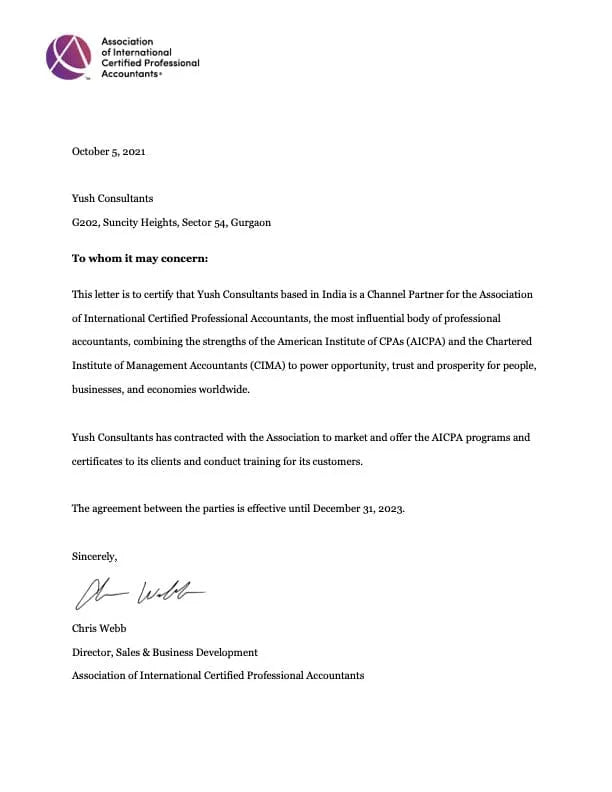
Eduyush supports eligible learners with regional purchase guidance, local payment convenience and activation help for AICPA & CIMA learning products. This is useful when deciding between one standalone course, a bundle and the complete U.S. International Tax Certificate.
| What learners often need | How Eduyush helps |
|---|---|
| Course selection | Guidance on whether this standalone course is enough or whether the full certificate is more suitable. |
| Regional purchase support | Local purchase experience and regional pricing where available on Eduyush. |
| Activation support | Help with post-purchase access and activation queries. |
| Related tax learning path | Contextual comparison with International Tax Foundation, Introduction to U.S. Outbound and Inbound Transactions, the U.S. International Tax Certificate and other AICPA certificate programs. |
How to complete this foreign subsidiaries tax course
Since this is a 7 CPE intermediate course, learners should treat it as a focused technical module rather than a general tax overview. It is best studied after basic international tax and inbound/outbound transaction concepts.
- Purchase Taxation of Income Earned by Foreign Subsidiaries through Eduyush.
- Complete activation and access the online AICPA & CIMA course.
- Review CFC and U.S. shareholder concepts first, since later topics depend on ownership classification.
- Study Subpart F income types, E&P adjustments, Section 962 election mechanics and PFIC consequences.
- Use the learning outcomes to test whether you can identify foreign subsidiary tax and reporting issues.
- If you need deeper coverage or a badge pathway, move to the U.S. International Tax Certificate.
FAQs on Taxation of Income Earned by Foreign Subsidiaries
What is the official product number for this course?
The official AICPA & CIMA product number for Taxation of Income Earned by Foreign Subsidiaries is ITCC25SSO.
How many CPE credits does the course provide?
The official AICPA & CIMA listing shows 7 CPE credits. The NASBA field of study shown on the course page is Taxes.
Is this course basic or intermediate?
AICPA lists the course level as Intermediate. It is better suited to learners who already understand basic international tax and inbound/outbound tax concepts.
Does this standalone course include a digital badge?
The official AICPA page states that this course can be bought individually or as part of the U.S. International Tax: Inbound and Outbound Transactions bundle. AICPA states that the bundle must be purchased to earn the digital badge.
Is this course part of the U.S. International Tax Certificate?
Yes. AICPA states that this self-study online course is part of the U.S. International Tax Certificate, a comprehensive learning program for global finance and accounting professionals.
What topics are covered in this foreign subsidiaries tax course?
The course covers U.S. outbound transactions, Subpart F income, earnings and profits in an international context, PFICs and foreign assets.
Should I take Introduction to U.S. Outbound and Inbound Transactions before this course?
If you are still building your international tax foundation, yes. The outbound and inbound transactions course gives a useful transaction-level base before moving into foreign subsidiary taxation.
Should I buy this course or the full U.S. International Tax Certificate?
Buy this standalone course if you want focused coverage of CFCs, Subpart F, E&P and PFICs. Choose the full U.S. International Tax Certificate if you want broader coverage, 51.5 CPE credits and certificate progression.

